
Introduction
On 1st September 2026, M5-3 students embarked on a journey to a waffle store, Kiasu Beancurd and Waffles Singapore, together with their teachers. The purpose of the trip was to instill crucial daily living skills beyond the classroom, such as communicating in making purchases, adhering to road safety practices and taking public transportation.
Preparing for the Trip
Prior to the field trip, we focused on teaching and practising road safety skills as well as the use of public transportation.
There are designated areas in the school that replicate a zebra crossing and a pedestrian crossing. In the classroom, students are taught how to identify the two crossings and the steps required to cross them safely.
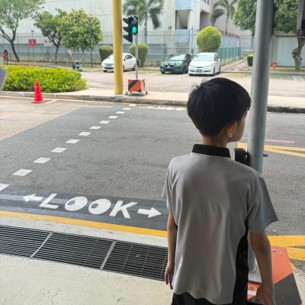
Students then have opportunities to apply their learning at the designated crossings. At the zebra crossing, they are guided to follow the instruction – “Look right, left and right again” before crossing the road safely.
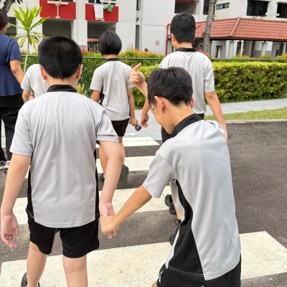
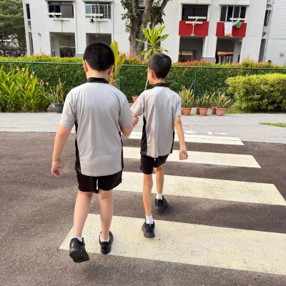
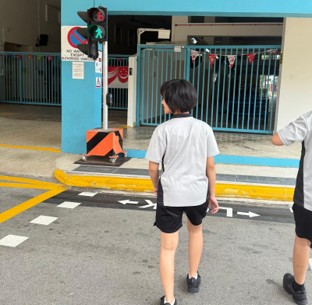
At the pedestrian crossing, students are taught that the “red man” signal means stop, and the “green man” signal means it is safe to cross. They are also taught to wait for all vehicles to come to a complete stop before crossing at either the zebra crossing or pedestrian crossing. This reinforces the importance of checking it is safe to cross, even when they have the right of way.
A decommissioned bus is also located within the school grounds, providing students with opportunities to learn and practise public transportation skills in a safe and controlled environment. Similar to road safety training, students learn the use of public transportation in the classroom before applying their knowledge in the practical setting.
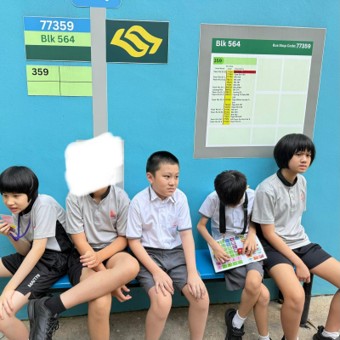
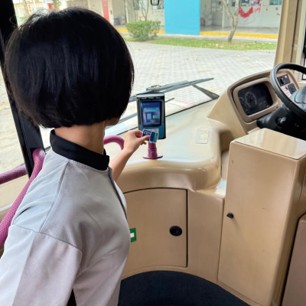
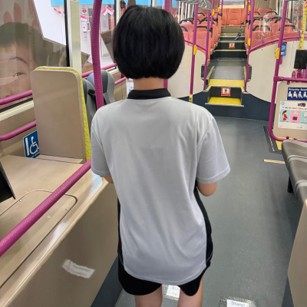
Students first practise staying seated on the makeshift “bus stop” bench and waiting at a safe distance from the bus. Thereafter, they boarded the bus one at a time and tapped their EZ-Link cards before finding an available seat. Students then practise sitting appropriately in their seats “throughout the journey” before pressing the bell to signal their stop. Upon alighting, they tap their EZ-Link cards again before disembarking from the bus.
The Day of the Field Trip
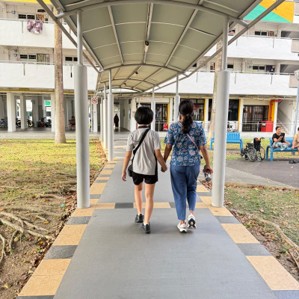
On the day of the field trip, students were able to recognise the various crossings and follow the teacher’s instructions on how to cross safely.
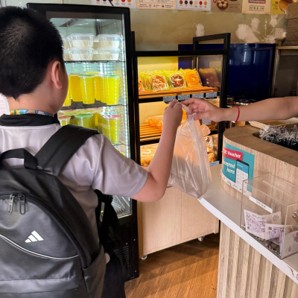
All students were provided with access to a communication board displaying their food options, as well as a communication strip to support them in making their purchases. They then made their payment, collected their receipts, and waited for their orders.
This provided an important opportunity for students to practise making purchases in the community setting and waiting appropriately while their orders were being prepared.
Thereafter, the students travelled back to school by public bus. All students demonstrated good understanding of the steps involved in taking the bus safely and adhered well to the social expectations while commuting. The regular practice opportunities provided in school helped significantly to ensure the smooth and successful running of the trip.
Conclusion
The field trip provided our students with a meaningful opportunity to apply the skills they had been learning and practising in school within a real-world setting. From demonstrating road safety awareness and using public transportation to making choices, communicating their orders and interacting appropriately at the waffle store, each experience allowed them to build greater confidence and independence.
More importantly, the trip allowed our students to generalise their learning beyond the school environment and engage meaningfully with the wider community. Such authentic experiences play an important role in developing the practical, social and communication skills that support greater independence and participation in everyday life
Ms. Yashaswini Jayabalan, Form Teacher (M5-3)